
I know how important it is to keep your heart healthy. If your heart does not get oxygen‑rich blood you might feel chest discomfort, breathlessness, unusual tiredness or dizziness. These symptoms can come from different causes. It is very important to see a doctor so the underlying problem can be found and the right treatment chosen.
I have seen patients who have undergone coronary angiography. This test is a way for doctors to look closely at the blood vessels that feed the heart. Coronary angiography can spot narrowing or blockages in the arteries. With that information cardiologists can decide whether medication, angioplasty, surgery or another treatment might be best.
For patients and their families, choosing the Best Cardiology Hospital in Jaipur with suitable cardiac facilities and access to experienced specialists can make the treatment journey easier to understand. Priyanka Hospital & Cardiac Centre, Jaipur, provides cardiac services, including angiography and angioplasty, supported by cardiac diagnostic facilities.
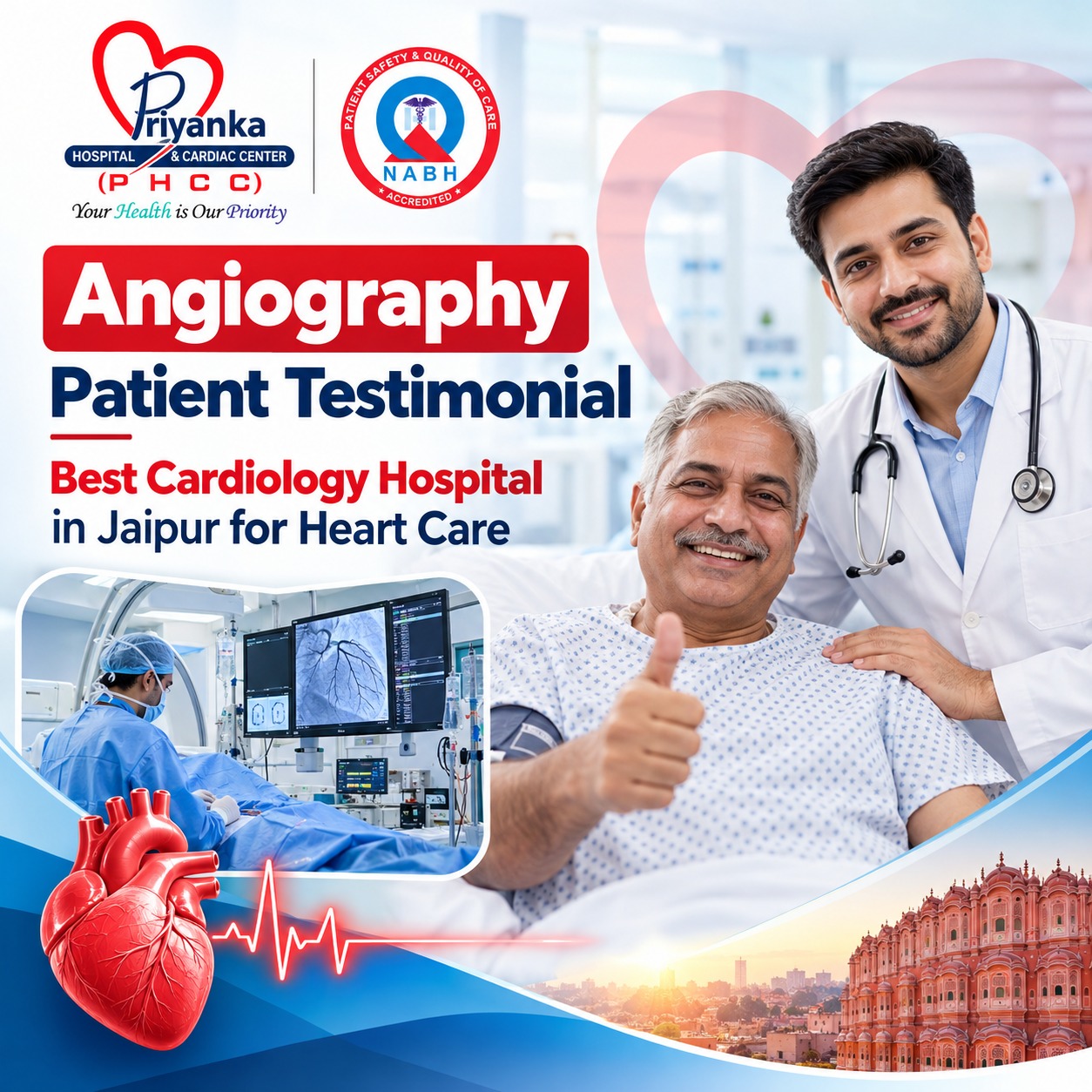
The hospital's angiography patient testimonial video offers a glimpse into a patient's hospital experience. It also provides an opportunity to understand the role of angiography and the importance of professional cardiac care when investigating possible heart problems.
What Is Coronary Angiography?
Coronary angiography is a test used to look at the coronary arteries. These arteries carry oxygen-filled blood to the heart muscle. The test uses a dye called a contrast agent and X-ray imaging to make the arteries show up clearly on a screen.
The pictures taken during the procedure help heart doctors or cardiologists see if any part of the artery is narrowed or blocked. This information is important when checking for artery disease or deciding on the right treatment.
Doctors may suggest angiography in a few situations. These include:
. Chest pain that keeps coming or feels serious and needs more testing.
. Signs or symptoms that point to coronary artery disease or when past tests show something unusual.
. Checking the heart after a heart attack or other heart emergency.
. Looking at the arteries before certain heart procedures.
. When other heart tests suggest that a closer look at the heart arteries is needed.
Angiography is not required for every person with chest pain. The decision depends on the patient's symptoms, medical history, examination findings, previous investigations, and the cardiologist's assessment. Choosing the Best Cardiology Hospital in Jaipur, such as Priyanka Hospital & Cardiac Centre, can help patients access cardiac evaluation and understand the available diagnostic and treatment options.
How Does Angiography Treatment in Jaipur Work?
Patients searching for angiography treatment in Jaipur often want to understand how the procedure is performed and whether it requires a long hospital stay. Although the exact process varies according to the patient's condition and the hospital's protocol, coronary angiography generally involves several stages.
1. Pre-Procedure Assessment
Before the angiography the doctors and nurses look at the patient's history. They check what medicines the patient is taking. They also look at any allergies the patient has. They review any test results that're important. Some patients might need blood tests or other checks. These depend on how the patient's feeling and their overall health.
Patients need to tell their doctor if they have problems with their kidneys. They should also mention if they have diabetes. They need to share if they had any reactions to contrast agents before. They should list all the medicines they are taking. The medical team will explain if any of these medicines need to change. They will also give instructions about what to eat and drink before the procedure.
Patients should never stop prescribed medication without medical advice.
2. Performing the Procedure
Coronary angiography is usually done in a room that is used for heart procedures. The person lies on a table and medicine is given to make the area where the tube goes in feel nothing. A thin and soft tube called a catheter is moved through a blood vessel in the wrist or the leg to reach the heart arteries. A special liquid is then put into the tube, which helps the doctor see the blood vessels clearly with the help of X-ray pictures.
The images help the cardiologist assess whether narrowing or blockages are present and determine their location and extent.
Patients may remain awake during the procedure. The medical team monitors them and provides instructions throughout the process.
3. Monitoring After Angiography
Once the investigation is complete, the catheter is removed and the insertion site is managed to control bleeding. The patient is then observed for a period determined by the procedure and individual medical circumstances.
The team monitors relevant observations and checks the insertion site before discharge or transfer to another area of care.
Patients receive instructions regarding wound care, physical activity, medicines, and follow-up appointments. Following these instructions is important for recovery.
Does Angiography Always Require a Stent?
No. Angiography and angioplasty are related but different procedures.
Angiography is primarily diagnostic. It provides images of the coronary arteries so that doctors can assess blood flow and identify narrowing or blockages.
Angioplasty is a treatment procedure. When appropriate, a cardiologist may use a balloon and, in many cases, a stent to improve blood flow through a narrowed coronary artery.
Not every narrowing requires a stent. Depending on the findings, the doctor may recommend medication, lifestyle changes, angioplasty, coronary artery bypass surgery, or additional assessment.
The recommended treatment depends on factors such as the location and severity of the narrowing, the number of arteries involved, symptoms, heart function, and the patient's overall health.
Patients should discuss their angiography results and available treatment options with their cardiologist before making decisions about further procedures.
Patient Testimonial: A Glimpse of Angiography Care at Priyanka Hospital
A hospital visit for a cardiac investigation can bring questions and uncertainty for patients and their families. Understanding the procedure, knowing what to expect, and having access to a medical team that can explain the process are important parts of the healthcare experience.
The video titled “Successful Angiography Patient Testimonial | Happy Patient at Priyanka Hospital & Cardiac Centre” features a patient in the hospital setting in connection with angiography care. The testimonial provides a visual introduction to the patient's experience at the hospital.
Every patient's medical condition and treatment journey is different. A testimonial should therefore be viewed as an individual experience rather than a guarantee that every patient will have the same outcome.
For people considering angiography, the most important step is to consult a qualified cardiologist, understand why the investigation has been recommended, and discuss the expected benefits and possible risks. A clear explanation of the procedure can help patients make informed decisions about their care.
Choosing the Best Cardiology Hospital in Jaipur
When searching online for the best cardiology hospital in Jaipur, patients should consider more than a hospital's name or promotional claims. Appropriate facilities, specialist availability, communication, and continuity of care all matter when choosing where to receive cardiac evaluation and treatment.
Access to Cardiac Specialists
Coronary angiography is usually done in a room that is used for heart procedures. The person lies on a table and medicine is given to make the area where the tube goes in feel nothing. A thin and soft tube called a catheter is moved through a blood vessel in the wrist or the leg to reach the heart arteries. A special liquid is then put into the tube, which helps the doctor see the blood vessels clearly with the help of X-ray pictures.
Suitable Diagnostic and Treatment Facilities
Cardiac tests need the tools and people who know what they are doing. Places like a heart catheter lab, heart imaging services and good monitoring and emergency care help in looking at patients and taking care of them.
The exact places needed change depending on the test. What the patient needs.
Clear Communication and Patient Support
Cardiac investigations may be unfamiliar to many patients. Clear explanations before and after a procedure can help patients understand their condition and follow their doctor's instructions.
Families may also need guidance about medicines, follow-up visits, activity restrictions, and warning signs that require medical attention.
A patient-centred approach includes explaining the available options and respecting the patient's informed decisions.
Cardiac Care at Priyanka Hospital & Cardiac Centre, Jaipur
Priyanka Hospital & Cardiac Centre offers cardiac services in Jaipur, including cardiology consultations, angiography, angioplasty, and other cardiac investigations and treatments listed on its official website.
Its cardiology services are supported by a cardiac catheterisation laboratory, diagnostic facilities, and intensive care support. The hospital's cardiac team includes specialists working across areas of cardiology and cardiovascular surgery.
For patients looking for a Best heart hospital in Jaipur, the hospital can be a point of contact for understanding available cardiac services and arranging an appropriate consultation.
Patients should confirm the availability of a specific specialist, procedure, or facility directly with the hospital before visiting.
The angiography patient testimonial video complements the hospital's online information by showing a patient's presence in the hospital setting. However, treatment decisions should always be based on an individual medical assessment rather than a testimonial alone.
Recovery and Care After Coronary Angiography
Recovery after angiography depends on the access site, the results of the procedure, whether any extra treatment was done and how healthy the patient is. Some patients can go home after a time of watching while others might need checking. Patients need to follow the instructions given by the doctors who treated them.
Important things to think about during recovery are keeping the area where the catheter was put in clean and following the instructions for wound care. Patients should ask their doctor when they can start work, exercise, driving and other daily activities.
The doctors might also suggest seeing them to talk about the results and decide if more treatment is needed.
Call a doctor quickly if there is pain, swelling, redness or fluid coming from the site. Bleeding that is not, under control or a hand or foot that becomes cold, pale, numb or hurts needs help. Chest pain that is not going away or trouble breathing suddenly also needs emergency care.
Following medical advice and attending follow-up appointments are important parts of ongoing cardiac
Frequently Asked Questions About Angiography
1. What is the main purpose of coronary angiography?
Coronary angiography helps doctors examine the arteries supplying the heart and identify narrowing or blockages. The results can help guide decisions about medication, angioplasty, surgery, or further evaluation.
2. Is coronary angiography a painful procedure?
Local anaesthesia is used at the catheter insertion site. Patients may experience pressure or temporary discomfort, although experiences vary. The medical team should be informed immediately if the patient feels significant pain or becomes unwell.
3. Is angiography safe?
Angiography is commonly performed and is generally considered safe when medically appropriate. However, it carries potential risks, including bleeding, bruising, reactions to the contrast agent, kidney-related complications, and rare serious events. A cardiologist can explain the risks relevant to an individual patient.
4. Does every angiography patient need angioplasty or a stent?
No. Angiography helps identify problems in the coronary arteries, but the findings do not automatically mean that a stent is required. The appropriate treatment depends on the patient's condition and the cardiologist's assessment.
5. How long does recovery after angiography take?
Recovery varies by patient and procedure. Some patients are discharged after a few hours of observation, while others require additional monitoring. The treating team will advise when normal activities can be resumed.
6. Where can I consult a cardiologist for angiography in Jaipur?
Patients can contact Priyanka Hospital & Cardiac Centre, Jaipur, to enquire about cardiology consultations and angiography services. A cardiologist can evaluate symptoms, review previous tests, and determine whether angiography is appropriate.
Conclusion
Timely evaluation of possible heart problems can help doctors identify the underlying cause of symptoms and plan appropriate treatment. Coronary angiography is an important diagnostic tool that provides detailed information about the arteries supplying the heart and helps guide further cardiac management.
The patient testimonial video from Priyanka Hospital & Cardiac Centre offers a glimpse into the hospital experience associated with angiography care. For individuals searching for the best cardiology hospital in Jaipur, it is important to consider specialist expertise, suitable diagnostic facilities, transparent communication, and individualised medical advice.
Priyanka Hospital & Cardiac Centre provides cardiac services, including angiography and angioplasty, for patients seeking cardiac evaluation in Jaipur. If you have concerning symptoms or have been advised to undergo a cardiac investigation, consult a qualified cardiologist to understand your options and the next steps in your care.